How to Clean a Dishwasher (the Right Way)
Several years ago, my dishwasher began making the entire kitchen smell like a pond and causing cloudy glasses. I assumed my dishwasher was broken, but as it turns out, the machine that cleans things just needed to be cleaned. Funny how nobody tells you that when you get your first place!
The cost of the fix is about a dollar and it takes around 30 minutes (most of the time is hands-off). You will use the same two things that Grandma has used to clean for generations: white vinegar and baking soda.
To clean a dishwasher, you need to remove and clean the filter, unclog the holes in the spray arm, and scrub the filter. After that, run the hottest cycle on the dishwasher with a bowl of white vinegar on the top rack. Next, sprinkle baking soda on the bottom and run a short hot cycle. If you do this monthly, you are done.
Why your dishwasher smells (and leaves film on glasses)
During each load, some food debris from the dishes gets washed away and sent down the drain. However, greasy substances, coffee grounds, rice, and other small food particles get trapped in the filter at the bottom of the dishwasher. When detergent residue and hard water minerals build up, they create odors and clouded glassware. The dishwasher has to work harder to clear the debris.
I promise you that's the problem if you haven't cleaned your filter before. Not a lot of people even know that their dishwasher has a filter.
What you’ll need
- White vinegar (about 1 cup)
- Baking soda (about 1 cup)
- An old toothbrush
- A toothpick or wooden skewer
- A dishwasher-safe bowl
That's the complete list. You don't need a special dishwasher cleaner — vinegar works just as well for a fraction of the cost.
Step 1: Empty it and check the drain
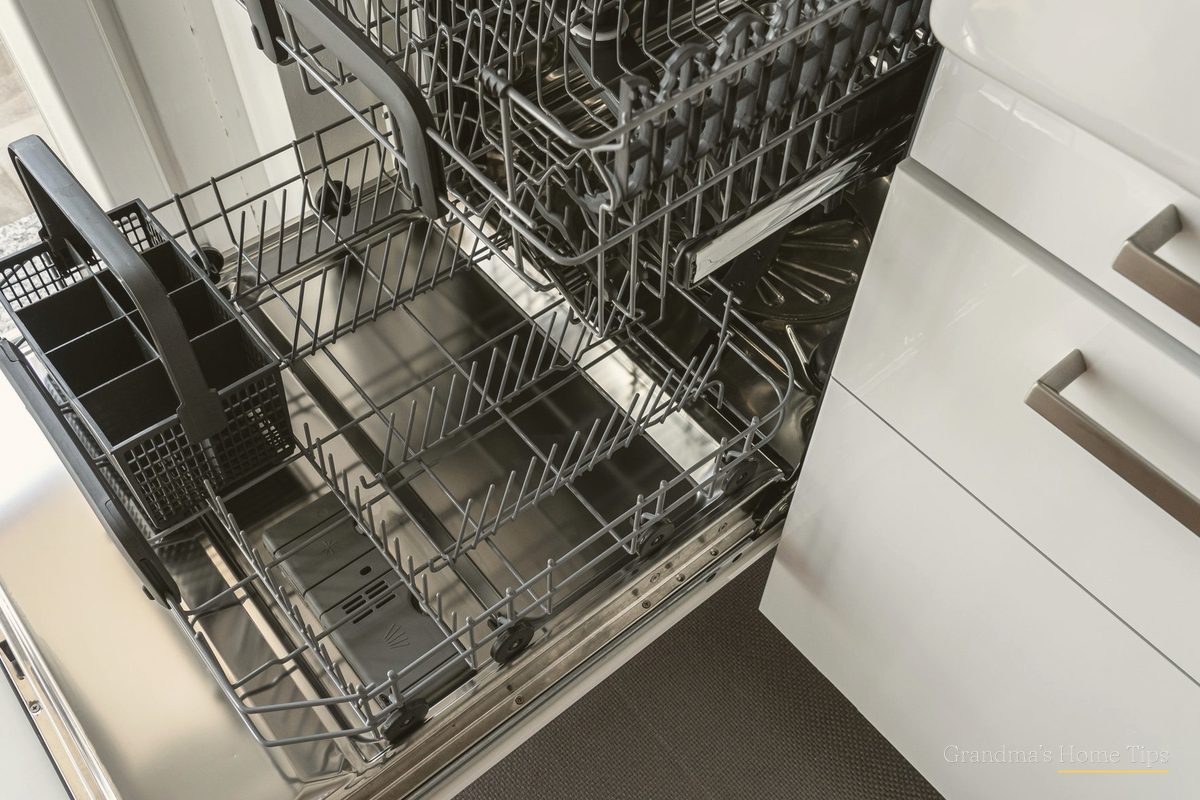
Remove the racks and check the area behind them at the bottom. Remove any olive pits, pieces of glass, or twist ties you find. This will keep debris from circulating while you clean.
Step 2: Pull out the filter and scrub it
The filter is the round part in the bottom of the dishwasher, usually located under the bottom spray arm. To remove the filter, twist it counterclockwise and pull it up. Most models have a coarse filter on the outside and a fine mesh filter on the inside.
Soak your items in hot soapy water for 10 min. It will be oh-so-satisfying. If your items have not been cleaned in years, this step will likely horrify you. That is normal.
To secure the filter, twist it back in until you hear a click. If the filter is loose, food may enter the pump, so ensure it is seated correctly.
Step 3: Clear the spray arm holes
Rotate the spray arms and observe the tiny openings on each arm. Over time, food particles and hard water get stuck in them, which is the reason your top rack stopped washing properly. Use a toothpick to clear the hole if it's blocked. If your model allows the arms to be removed easily, go ahead and give them a rinse in the sink as well.
Step 4: Run a vinegar cycle
Place a dishwasher-safe bowl with one cup of white vinegar on the top rack, making sure there is nothing else in the dishwasher. Run the dishwasher on the hottest cycle available. The vinegar will disolve mineral build up and will cut leftover grease on the dishwasher. It will also kill the bad smell instead of just covering it up.
To start, avoid pouring your vinegar straight into the bottom of the tub, as it will drain away within the first few minutes of the washing cycle. Your tub's bowl will release it gradually throughout the entire cycle, which is the secret my mother-in-law swears by.
Step 5: Follow with a baking soda rinse
Spread a cup of baking soda on the bottom and let it run a short hot cycle. It will scrub what vinegar loosened and remove odors. Now, your dishwasher should smell like nothing at all, which is what we want.
Step 6: Wipe the door, gasket, and detergent trap
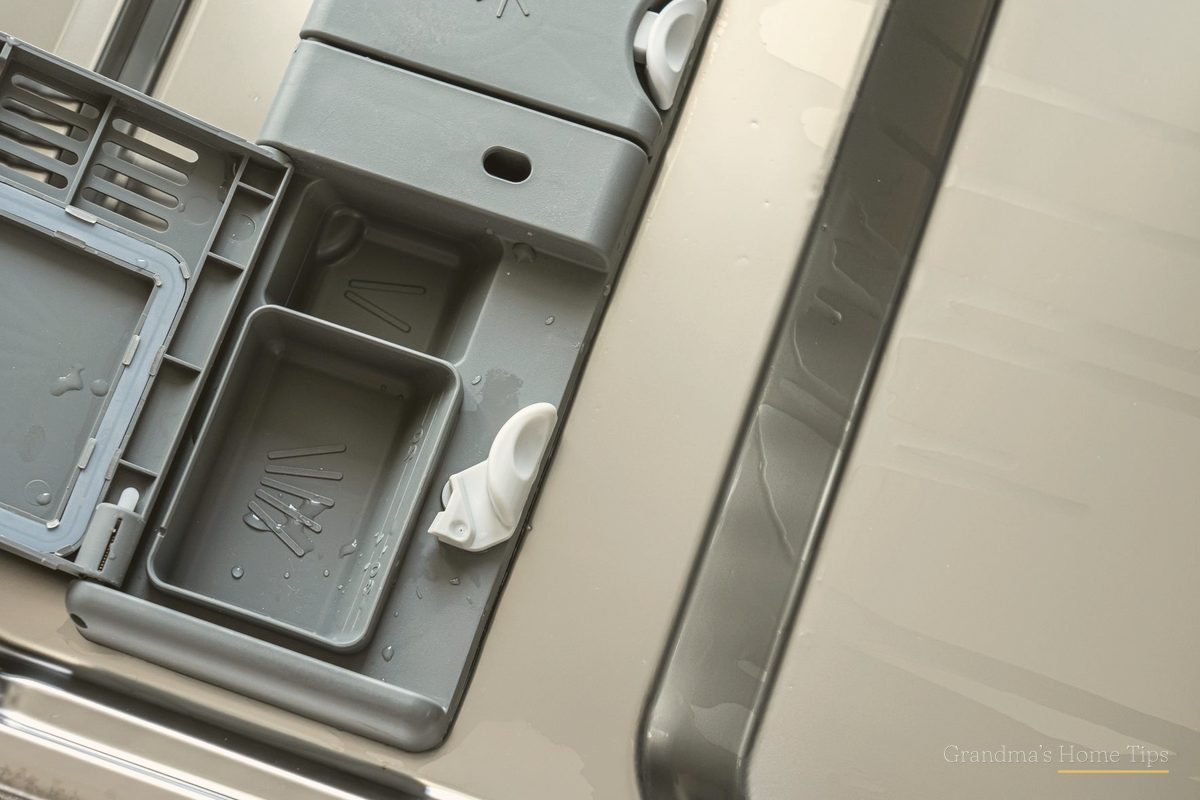
Using a cloth dampened with vinegar, wipe down the interior of the door and the rubber gasket that surrounds it. Mildew is known for hiding in that fold. Use the toothbrush around the detergent door and on the lower edge of the door, where water doesn't reach during a cycle.
How often to do all this
- Weekly: quick rinse of the filter under hot water (30 seconds)
- Monthly: the full routine above — filter scrub, spray arms, vinegar cycle, baking soda rinse
- As needed: gasket and door wipe-down whenever you spot grime
Your washing machine collects the same kind of gunk, by the way — here’s how to clean a washing machine, front and top load.
What not to do
Forget about bleach. It can damage the stainless steel interior, and bleach should never be mixed with vinegar because that produces toxic chlorine gas. Cycle vinegar and baking soda separately, and they'll do the job safely.
Also, don’t mix vinegar and baking soda at the same time, either. The fizz is what is satisfying, but the two cancel each other out, and each one works better when used alone.
Frequently asked questions
Do I really not need a commercial dishwasher cleaner?
The tablets are mostly citric acid. Citric acid can be handled by vinegar that costs a tenth of the price. If you have serious hard-water buildup, a citric-acid cleaner just once or twice a year is a reasonable upgrade; vinegar will handle the job for the months in between.
Will vinegar damage my dishwasher?
Monthly cleaning cycles are what most manufacturers recommend. You may have read the caution about pouring vinegar, but that's only if you're pouring vinegar into every load. This could be hard on the rubber parts over time. One time a month in a bowl on the top rack? No.
I cleaned everything and it still smells. Now what?
If the drain hose dips down where it connects to the sink, water may sit in the hose and allow odors to back up into the dishwasher. If you have a garbage disposal, run it; a lot of dishwashers drain through the disposal, and if the disposal is dirty, it will smell like a dirty dishwasher.
You’ll only have to do this monthly version once, after that it’ll take about 10 minutes each month. Just put it in your calendar for the first Saturday of each month and your glasses will stay clear, your kitchen won’t smell, and your machine will last for years!